We Were Deceiving Ourselves

While wasting some time during a power-outage at our house over the weekend, I was scrolling through social media. I came across one of the many IndyCar-related Facebook groups I’m a member of and saw a 2015 photo of driver James Jakes.
I put James Jakes in that category of obscure drivers who are quickly forgotten, much like the late Ted Prappas, Tero Palmroth and the most forgettable of them all – Philippe Gache.
The photo of the car struck me more than the reminder of the forgotten James Jakes. I was reminded of just how ugly cars were during the aero kit era (2015-17).
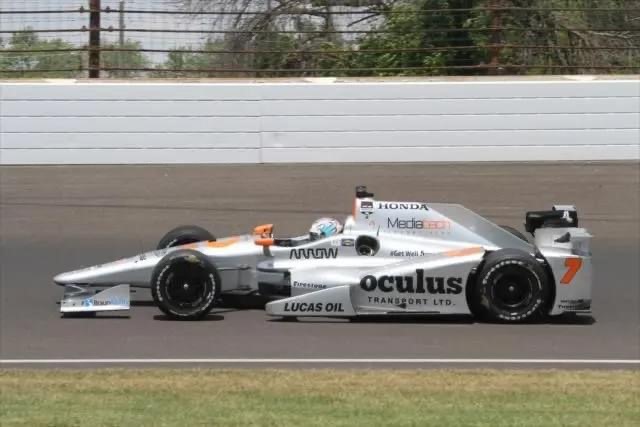
The Jakes car was the Honda speedway aero kit. Between the Honda and Chevy aero kit, Honda definitely had the uglier of the two. The giveaway difference between the Honda and Chevy was the dorsal fin going down the spine of the air box, reminiscent of the random dorsal fins found in CART in the mid-to-late 90s. They were not a good look and neither were those found on the 2015-17 Hondas.
What’s bad is that Honda’s speedway aero kit looked a lot better than their road course/street course version, pictured below. The photos for both the Honda and Chevy aero kits are from the original renderings released before the cars actually raced. If memory serves me correctly, both manufacturers toned down a few of the wings that were hanging all over the place.



The Chevy wasn’t much better, but compared to the Honda – it looked downright attractive, without the dorsal fin of the Honda.


For those keeping score, the Chevy aero kit won all three championships of the aero kit era, but Honda won two out of three Indianapolis 500s in that time.
My question is – how on earth could we even look at those cars and not realize just how incredibly ugly they were? That’s a sign that we, as a society, can get used to anything.
I’m old enough to remember bellbottoms, which became a craze when I was in the seventh grade. I hated them and refused to wear them at first, hating change even back then. But by the middle of eighth grade, I caved in and started wearing them.
By the time I graduate high school, my wardrobe consisted mostly of bellbottom pants and I thought anyone not wearing them looked like a dork. When I got up to college as a freshman, I realized that no one but people from small towns like mine were still wearing bellbottoms. By the time I was a sophomore; I had totally ditched them, and never wore a pair of bellbottoms again. Fortunately, by this time I had enough sense to never don a leisure suit.
Why the fashion history? Because at the time, I thought I looked pretty hip in my bellbottom pants. Slacks? Jeans? It didn’t matter. In the mid-70s, my closet had nothing but bellbottoms. Looking back, I’m totally embarrassed to admit that what looked so atrocious now – I thought was really good looking at the time. I’d like to blame it on being a high school kid, but I rarely chased many fads – even back in those days, but the bellbottom craze was the exception (except, of course, my hairstyle), but I digress…

The point is, we can convince ourselves that almost anything looks good if we get used to it over time. But when we get reminded how things really should look, we wonder how we ever convinced ourselves that the former was a good look. Even back then, however, I knew a blue tux shirt with ruffles was something to laugh at. All the guys had to wear this ridiculous ensemble. Three months after that embarrassing senior picture was taken, I got to college and was again reminded that my look was about three years behind the times. It didn’t take long for the locks to go and I adopted this look. For the most part, it’s still the look I still carry today – minus a lot of gray and a lot of weight – Change is Bad!

When the Universal Aero Kit was unveiled for the 2018 season, it was like a breath of fresh air. Gone were the endless supply of wings and winglets drooping all over the car. Mercifully, the fairings that had surrounded the rear wheels since 2012 were removed also. The air box, which had been with IndyCar since 1997, also finally went away. The result was almost the best looking Indy car we had seen in almost twenty years. It was sleek, but simple and unencumbered.

It was harder to drive, because there weren’t all of those wings creating massive downforce. It created a car that required more talent to drive and was quite pleasant to look at.
We only got to look at that car for two years, because the aero screen was placed atop the cockpit at the start of the 2020 season. I will not argue the safety aspect that the aero screen brings, but for pure aesthetics – not many will claim that the car looks better. But we saw another example of the safety the aero screen brings, just last weekend at Mid-Ohio, when Marcus Ericsson left a huge tire mark on the aero screen of Felix Rosenqvist – right where his head would have been.
I’m not saying that many of us thought the cars were really sexy and good-looking in the aero kit era of 2015-17, we just learned to overlook the sheer ugliness and convinced ourselves that it didn’t look that bad (yes it did).
Thinking the aero kit cars were good-looking was much like thinking the fashion of the 70s was good looking. We were lying to ourselves. The power of the human mind to deceive even ourselves is an amazing thing.
George Phillips
 Oilpressure
July 12, 2023 at 6:54 am
Yes, the 2018 car looks gorgeous!!!
July 12, 2023 at 8:50 am
While some things can look timeless, time has a funny way of making much of the past look hilariously out of date. To a young person today, the things I wore as a kid in the 90s don’t look any less ridiculous than what what folks wore growing up in the 70s. The past is full of pretty and not-so-pretty race cars, but few look like they belong on the track today.
Both of the 2015 aerokits shed front wing elements, which were prone to breaking off and causing cautions even under minor contact. Chevrolet ditched the elevated winglets on the front wing after NOLA while Honda first showed up without their enormous front wing endplates at Detroit. By 2016, the optional to run sidepod-mounted wings that Chevrolet offered were gone as well.
The aerokits were certainly not attractive, but they did prove interesting for a time. I recall finding it quite interesting watching the cars at Texas during the aerokit era, as teams would often add or subtract wings and flicks and whatnot for practice, qualifying, and the race. Sometimes they would even run an aerodynamic element on one side of the car but not the other. To some extent, the teams still do this, it just isn’t quite as visible.
July 12, 2023 at 11:38 am
It was a brave initiative trying to make a single chassis formula more interesting which sadly did not work out. If I remember correctly Derrick Walker was the mastermind and he had the best interests of the series in mind.
July 16, 2023 at 10:01 pm
Yeah, I’d agree with this. It was completely well intentioned. Because of that, I want to think of the aerokits in a positive light, regardless of how bad they may have looked.